Monday, 21 November 2011

SWIMMING WITH DOLPHINS

With two days to kill there was no need for undue activity so the day unfolded more slowly than of late.  Whilst the keen divers organised a suitable challenge, 7 of us decided that ‘Snorkelling with Dolphins’ would suit.  Safely delivered to the destination on St. Anthony’s Bay we found that snorkel hire was an additional $9.  Strange.  Once in the dolphin pool we made up one of the groups and were introduced to Anthony, a six year old dolphin. 

His trainer put him through his paces and we all got to stroke him and examine him up close; he felt like slippery wet rubber.  Apparently dolphins shed their skin constantly in order to achieve the smoothness that helps them to swim so effectively.  After this there was the inevitable photo opportunity before we were set loose to swim around.  I found the water surprisingly murky and was constantly surprised whenever a dolphin hove into view.  I imagined that I’d get to see more by being on my own but those who kept in groups of three saw much more so I was wrong on that count.  Even so, an amazing experience even after shelling out the outrageous price for the photo CD.


Back in our West End resort we were treated to a glorious sunset at one of the bars built out into the sea.

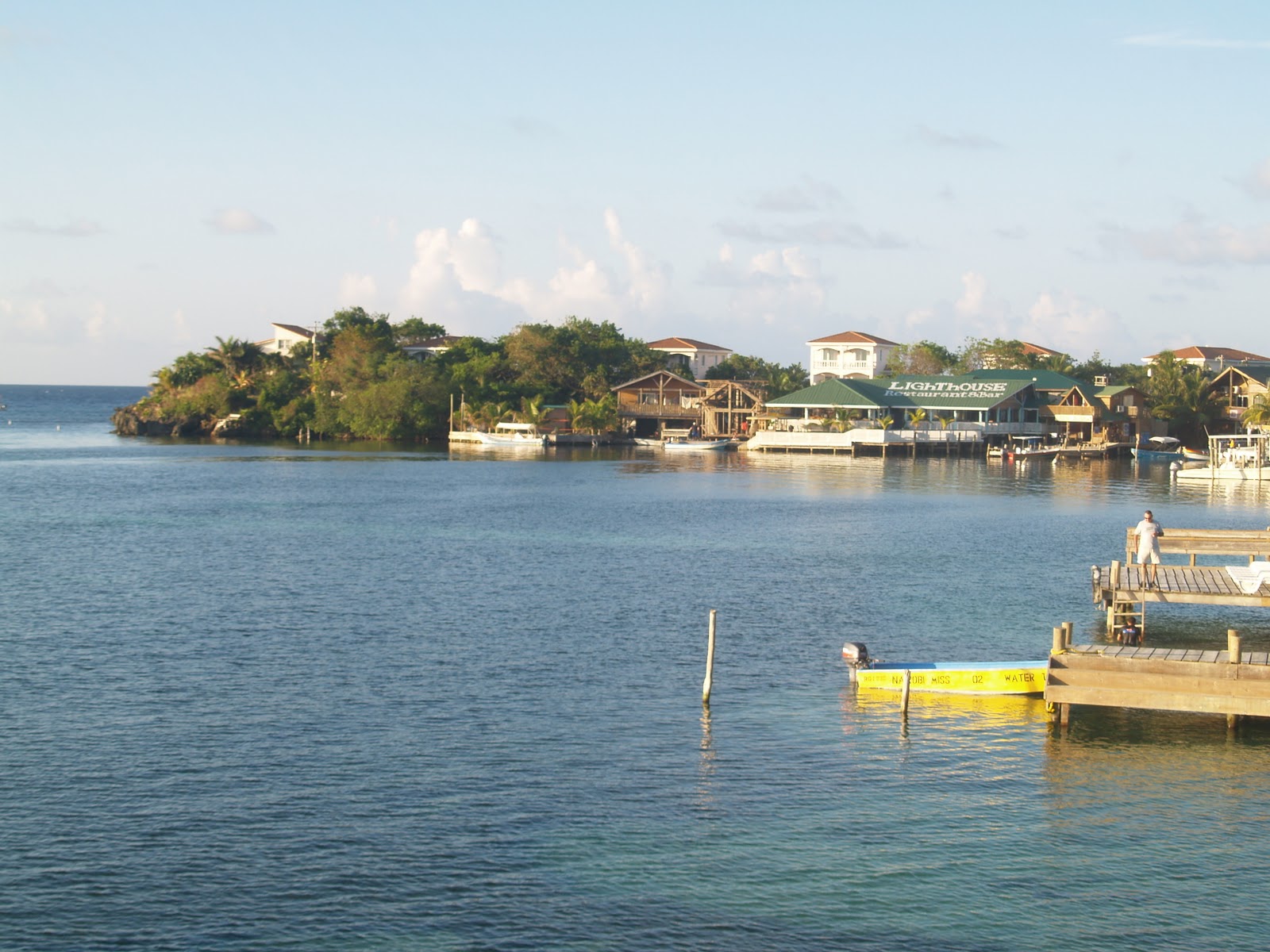

Not the busiest of days but definitely one to remember.

Friday, 18 November 2011

COPAN


With only a single day in Copan I decided to miss the final set of Mayan ruins and simply potter about the town.  Inevitably for me, this meant climbing the hill behind the town to get a better view.

Low cloud delayed my start but as the heat increased this began to disappear.  Copan seems more wealthy than many of the places we have visited and most of the houses along the paved street, although small, were cement rendered and painted.  New development is taking place and about the point where the paved street turns to a dirt track a new ‘town house’ can be bought.

Even in such an upwardly mobile residential area piles of rubbish are still to be found.

Beyond this point the houses became less well constructed and were more obviously linked to small plots of land.  Some were mud brick or even a local version of wattle and daub, a bamboo frame forming the base for the mud.  Although most properties have piped water the sinks are outside and I assume the toilet is somewhere out back. 


I still haven’t really got used to the sanitary arrangements throughout Central America and find it hard to throw the used toilet paper into the rubbish bin beside the loo rather than into the bowl itself!
Climbing higher the heat and humidity began to slow me down to the point where I was forced to accept the more cautious target of climbing the lower hill of the two possible.  By now small plots of maize were the majority land use although some sugar cane was growing in a small area around a radio mast.  Near the top, the land flattened out and I found a football pitch.  Views back towards town were still somewhat hazy but the higher land behind was much clearer.


Vultures swooped nearby and I settled to try and photograph them.  A man wearing a typical Honduran hat passed by and asked what I was doing.  This was beyond my command of Spanish but he waited patiently whilst I got out the dictionary and explained that I was waiting to photograph a vulture.  Eventually I gave up and, of course, as soon as the normal lens was put back on the camera, the vulture returned.  Now, the hats I can understand but why some of the men wear wellie boots is utterly beyond me.

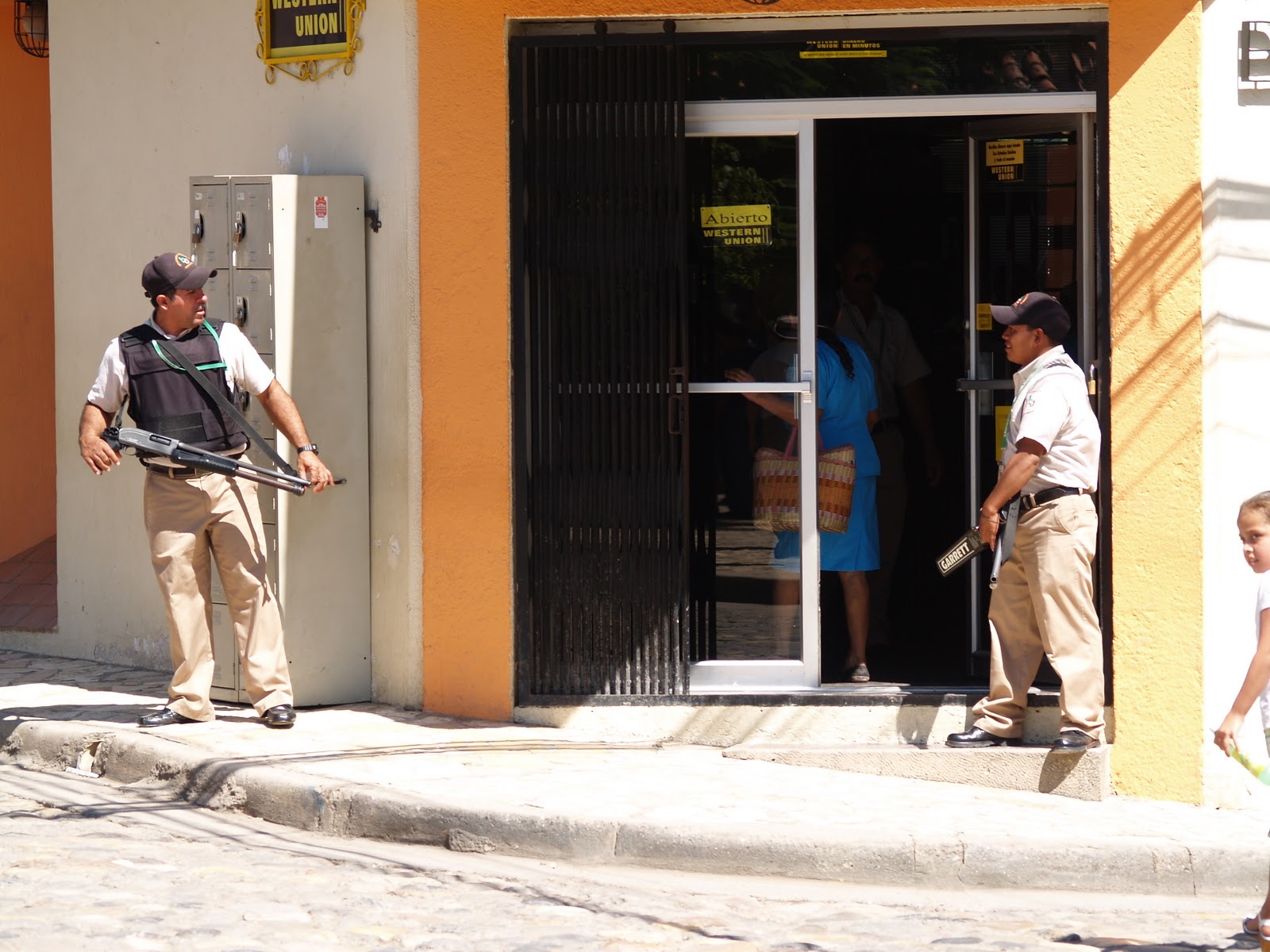
Back into town I paused to reflect that I’d started to take the level of armed security for granted.  Every building that has large amounts of cash has an armed guard outside, delivery trucks are similarly protected and one of the restaurants in town has a man carrying a pistol.  Beyond the edges of town virtually everyone seems to be carrying a machete, some of which must have blades nearly three feet long.

In the afternoon I went with Sarah to McCaw Mountain, a sanctuary for McCaws and other endangered tropical birds.  Hunted as pets, they are now endangered in the wild and most of the ones here are recovering from the stress of inappropriate captivity and diet.  The highlight was the interactive zone, where we were able to get up close and personal with the birds.  Transport to and from the place was by tuc-tuc, my first ride in one and exciting given the nature of the road.


With a long day’s travel to Roatan Island in prospect it was early nights all round in preparation for a 5am start.  I can’t speak for the others but I found it exhausting.  A walk to the bus station (my pack seems no lighter), bus, bus, fast ferry, taxi and another walk brought us to a new hotel in a matter of about 12 hours in all.  Desperate for food, service proved slow but a couple of rum punches later and I slept really soundly for the first time in ages.


Tuesday, 15 November 2011

INTO HONDURAS

A busy morning in which I caught up with the Blog, no mean task considering the hundreds of photographs that had to be combed through.  Then it was time for a quick journey to top up with toiletries before managing a haircut.  All go for us travellers!  First thing in the morning I witnessed one of the three volcanoes sending out a puff of smoke so it wasn’t my imagination a couple of days ago.


At 2 pm transport arrived to take the hardy souls to see the Pacaya volcano.  We all thought that it was one of the three prominent peaks around the town but we actually headed back towards Panama City to find it.  The road was decidedly tortuous in places and a potholed in places so the van had to weave a path that constantly took it to the wrong side of the road.   All part of the fun of driving in Central America.  We picked up a guide, Cesar and soon found the going tough.  The volcano erupted only last May so the paths were still coated with loose ash that made for difficult walking.  Although many of the crops growing at the time were destroyed by the ash falls it was clear that nature was very quickly re-establishing itself with a variety of plants emerging through the black ash and cinders. 

Apparently a waiver has to be signed to climb to the crater so we were not able to do this but Cesar led us up and along an older eruption crater rim where we got a superb view of the summit and were able to see steam still rising from the rocks in places.  High up we were able to see the whole of Guatemala City laid out behind us as well as the three peaks around Antigua. 

As the sun set the landscape took on a magical quality that made for a perfect day out.  The descent was a mad scramble running down the steep and loose cinders until we were able to find a more conventional path. 

The adventure ended in darkness, finding our way by torchlight.  The evening was spent enjoying a final meal as a group before most called it a day fairly early given the scheduled 4.50 am departure for Honduras.

All assembled on time despite a distinct lack of sleep for some.  Poor Isabella was still feeling the effects of her homestay and looked decidedly unwell.  The six departing members were replaced by six new ones; two Americans, three Brits and a Dane.  The new guide, Andres seemed to be very together and his tourist bus arrived on time – a good start!  The aim was to beat the traffic in Guatemala City and this was duly accomplished without fuss.  With the sun rising we were rewarded with a superb view back over the city, shrouded under a layer of low cloud/fog and with the sun lighting up the volcanoes behind.  Once again, much of the journey seemed to be a climb but now we were definitely crossing much drier terrain with fewer trees and less luxuriant vegetation.  There were lots of landslides from the recent heavy rains and in places they have not yet been entirely cleared away. 

Eventually we stopped for breakfast and I strolled away from the place to try and take some pictures.  I’m not sure why I haven’t commented on this before but the access to every village since Mexico City has been guarded buy a series of speed ramps so steep that all vehicles have to slow right down to cross them.  Here’s an example!

The border crossing went without a hitch and in a decidedly relaxed manner – not like leaving Mexico and by the early afternoon we were booking into a lovely little hotel in Copan.  We had been led to believe that the standard of hotels would go downhill after Guatemala so this was a pleasant surprise although I am still sharing with two others.  I think that single travellers are subsidising the comfort of the couples.   Perhaps Intrepid should look at this.  Since then a leisurely afternoon visiting the Cash Machine, catching up on e-mail and my bank account, and enjoying a coffee in a café with a view of the surrounding hills with the Doors playing in the background.  Not such a hard life, really!

Sunday, 13 November 2011

GUATEMALA - BACK TO ANTIGUA

A 7am start saw us loaded into one of the trucks and we headed up the hill back to Solalà and another chicken bus.  As it was Saturday there was nothing like the crush of the previous journey but generally the buses were still three to a seat.  We made exceptionally good time and were back in Antigua by 10.30, giving me time to assemble a large bag of laundry, visit the supermarket to buy new underwear and toiletries and get more cash from the bank, all before lunch.  My attempts to get US dollars failed and I had to settle for more Quetzales.
I spent the afternoon wandering the streets and climbing up to La Cruze, which offered a view over the whole town. 


Some time in Fernando’s internet café catching up with e-mails and it was soon time to get ready for the final meal of this trip.  Mauricio took me for a beer in a Bavarian bar before the meeting so I was able to thank him and give him my tip in private.  He has done a fabulous job in what are difficult circumstances.  I've referred to him quite a lot but can't remember whether he's made it into any blog photos so here he is!


After a convivial meal we visited a couple of clubs and most people ended the night in good spirits; they certainly consumed quite a lot!  Tomorrow is changeover day and we get a new tour leader.  Ten of us are carrying on and plan to climb a volcano in the afternoon so will miss the first group meeting.  Not an auspicious start to proceedings, especially as Monday is set to be a very early start.

GUATEMALA - HOME STAY

After a night of broken sleep I rose early, prompted by the noise of roosters crowing, dogs barking and vehicles honking at the bend below the house.  Mauricio was up and about and we discussed the level of poverty in the village.  He pointed out that for many, the entire day is virtually taken up by preparing food.  So, if a guest provides a tin of beans for a present the result is that they give their hosts more free time but they have no way to make use of that time!  From my vantage point on the terrace I observed a procession of Toyota flatbed trucks (utes for my Australian readers!) making their way up the hill.  All carried an improbable number of passengers, with some hanging on the back if the vehicle was particularly full. 


This was the very local link to the chicken bus system.  After a breakfast of fried eggs, refried beans, chillies, tortillas and more of the sweet coffee we left to meet the others on the square.  The rest of the group set out to tour the lake and surrounding villages whilst I’d decided to stay behind and explore closer to home.
Climbing the hill out of the village I met several men carrying large bundles of firewood secured by a strap which came over their shoulders and across their foreheads.  This is how the Mayans of old carried the blocks of stone that went into the pyramids! 


Later I saw a young man using the same system to carry concrete blocks up a steep street in the village.  On returning they were still in action so this was clearly a day’s toil for them.  I soon reached the previous day’s vantage point and decided to keep going to the next town, Solalà.  Below the road the hillside was cut into terraces that grew a range of vegetable crops. 


I left the road to examine things more closely and a man appeared to ask me what I was doing there.  He seemed pleased when I complimented him on his garden.  Arriving in the town I found out where all the people leaving San Jorge had been going.  The central square was packed with the most highly populated local market I have ever seen. 


This was not for the tourists; indeed I was the only non-local I saw in the place until I found a group of Americans on the outer fringes of the place.  Not only were the women in traditional Mayan costume but a goodly number of the men were as well.   


All the textiles on sale, whilst still colourful were clearly of a different design to the wares on show yesterday at Chichi.  Eventually I found a café where the coffee only cost 3 Quetzales, a third of what it costs anywhere else.  Unfortunately, this was also almost too sweet to drink.  Returning to the village I needed a rest and must have slept for a while before setting out to explore San Jorge.  Must be the effect of altitude again!

If it were not for the obvious benefit of electricity it would be easy to think this village was still in the early C20.  Bizarrely, many homes have fridges but most don’t contain food and plenty are not even switched on.  The streets were steep, narrow, dusty and stony in places so provided further exercise for me. 


I found the school but, as the children are currently on holiday there was nobody there.  The classrooms were distinctly basic and contained lots of chairs so numbers must be very high.  One class even had a whiteboard – I wonder where the pens for it come from!  There was also a communal washing area with several women busy scrubbing their laundry.  Clearly there is money in the town as one house had a giant satellite dish outside it whilst elsewhere there is building work going on.  Ever since Mexico I have pondered about the number of buildings with structural steel poking out of the roofs.  When I ask about this I am usually told that the custom is to build upwards as the family and/or income grows.  Here, for the first time, I saw evidence that this is actually the case. 


Given the amount of rubbish on the streets I had also begun to wonder about the Intrepid initiative in the village to encourage recycling.  After a while I found the rubbish dump where this was actually happening and once I sat still on the steps of the church, I could see a constant procession of children carrying bags of sorted materials to the place.
From this vantage point the life of the village passed in front of me.  Girls seemed to be in constant motion on various errands, often with younger children in tow. 


The boys were mainly involved in a fluid football match which seemed to be two different matches going on simultaneously. 


Occasionally, a taxi or vehicle arrived but the game carried on.  A motorbike with a very attractive girl on the back came and went – same thing the whole world over! 


Despite some serious contact, the football match continued with no fighting or aggressive reaction to challenge in the whole time I was there.  All of a sudden a group of older youths arrived with another ball and as their numbers rose another game began to take place, replacing the youngest group.  However, there were still two simultaneous matches!

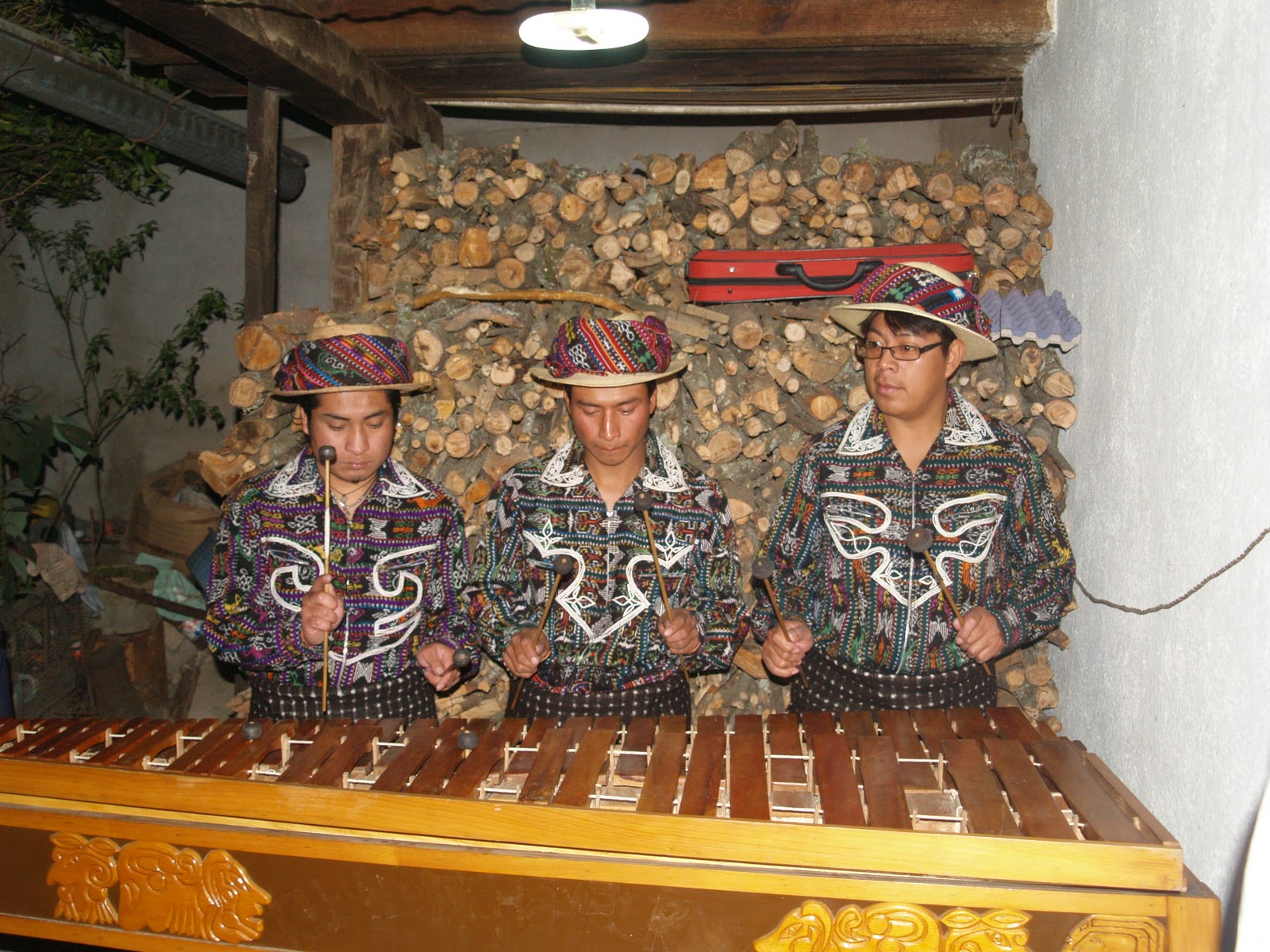
The rest of the group returned late from their adventure on the Lake and the evening was given over to a communal meal where all the families and guests got together.  The food had been prepared on a basic wood burning stove and consisted of a thick chicken broth with a bit of bird in it.  There were also tamales, a maize dough, boiled in a wrapping of sweetcorn leaves.  This was broken into pieces and put into the soup.  There was also a vegetable which I didn’t recognise.  I found this to be perfectly palatable if somewhat bland but it clearly wasn’t to the taste of some of the group.  The entertainment was provided by a Guatemalan Marimba band, a group of three musicians playing a giant xylophone type instrument. 


The girls were all dressed up in traditional costume but we were told it would have been too expensive to kit the men out in similar fashion although some of the group wore things they had bought at the local markets.  The meal over, most of us entertained the children for a while before taking to our beds.  Although the home stay was not to everybody’s liking I think it is an important initiative and Intrepid should be applauded for it as it provides travellers with something that is definitely not a fleeting experience.

GUATEMALA - CHICHICASTENANGO MARKET


Throughout Central and South America the vast majority of people travel by the Chicken Bus, so named because people are packed in like chickens rather than the fact that chickens are the passengers (although this does happen).  These buses are ex-US school buses with a very colourful paint job.  Todays destination was a famous Mayan local market followed by two nights home stay with a family.  We were all warned to stay close and make sure that we all got on and off at the same time.  We’d packed a day bag for the home stay but I was distinctly weighed down by the rice, flour and beans bought for my host family.  We didn’t even reach the bus station before we were all aboard the first bus, already a tight fit with three to a seat designed for two. 


The man next to me seemed concerned that I was unwell so fortunately my Spanish was sufficient to convince him that I was merely tired.  Several buses were used, passengers came and went and eventually I was wedged in with a whole family with a tiny baby, Anna Maria who seemed much preoccupied by my glasses.  The journey was dramatic to say the least.  The road was good but there were many bends as it wound its way higher into the mountains.  The driver seemed to be permanently on the telephone with one hand and gesturing with the other, as we bucketed along at breakneck speed with lots of overtaking and changing of mind in places.  Photography was impossible!
We made remarkably good time and arrived at Chichicastenango with three whole hours to spend at the market, an overwhelmingly colourful and crowded place. 


We were warned to stay in the area of the market but I have to confess that I explored a little further.  To be honest I felt less threatened the further from the market I got.  Amongst the stalls I was a constant target for the many vendors, away from there nobody was interested in me at all.  There were lots of children hanging around the cafes, ostensibly shoe shine boys but what they really wanted was food.  I left half a plate of chips for two of them which they dowsed in tomato source and consumed in seconds.  They then became instantly hyper active!


From here a private bus took us to San Jorge de la Laguna, a beautiful location overlooking Lake Atitlan with the village clinging to very steep slopes. 


Whilst we waited for our families to assemble, a football match took off on the dusty square.  We were overwhelmed by the numbers and considerable skill of the local boys!  Our hosts, Felipe and Christina had two children, Ronald and Roberth; an unusually small family given the grip the Catholic Church still has in this area.  The house rose on several levels from the street and had a small terrace looking back up the hill whilst the view from the kitchen overlooked the lake and volcano beyond. 


Edmund had brought the makings of a vast salad which supplemented what would otherwise have been a very simple meal, consisting of spaghetti, refried beans, some processed sausage, chillies and tortillas.  This was accompanied by a mug of incredibly sweet coffee.
Christina left us at seven o’ clock to go to church so Edmund and I went for a walk around the village.  It really was desperately poor with very little to do, although all the churches had some kind of service going on.  There seemed to be an improbably large number of small shops – tiendas – all selling the same limited range of soft drinks, snacks and sweets.  Most had fridges or coolers but in many cases they were not switched on.  With no sign of activity at the house we went to bed by 9 pm and discovered that the strong smell of polish obscured the air of damp which pervaded the otherwise comfortable room.  Given the concrete block construction, recent heavy rain and northerly aspect, I guess the place simply hadn’t dried out.

GUATEMALA - ANTIGUA


Another early start but the hotel had agreed to provide a welcome breakfast so we set off in good heart to rendezvous with our latest bus.  Out onto the strikingly modern bridge and we were headed west on the nation’s major highway; mostly dual carriageway and mostly in good condition.  Everywhere were signs of a prosperous countryside with plenty out working in the well-ordered fields; digging, fencing spraying and rounding up cattle. 


The recent heavy rains had had a considerable impact and many gangs were out clearing ditches and, as the land began to rise, getting rid of landslides that had strayed onto the road.  Considerable areas seemed to be set out as new rubber plantations but vegetable crops, sugar cane and oil palm were still common as well as the staple, maize.  All the little towns we passed seemed to have incredibly well ordered scrap yards, organised by vehicle parts so wings, axles, wheels etc. were all easy to find.  We'd all got used to the presence of armed police but at one 'comfort stop' we came face to face with the evidence that others might be armed as well!


We reached Guatemala City early as planned and negotiated a crossing with relative ease as the many dual carriageways and underpasses were not too busy.  There were all the signs of greater economic development with large stores, hotels and banks as well as plenty of more modern vehicles.  Security was also more evident as every sizeable building had an armed guard posted outside.  Motor cyclists nearly all go without helmets, a strange decision given the risks they seem prepared to take.  At the same time, the poorer side could be witnessed with plenty of basic housing, stalls manned by children selling little more than fruit juice and old men carrying enormous bundles of firewood.


By now we had clearly reached the mountains and the van began to struggle in places.  Despite the altitude and aridity cactus began to appear in places, the countryside was still predominantly green.  Soon we descended into Antigua, a charming colonial style town set out in a grid pattern, surrounded by three volcanoes, one emitting wisps of steam although that could be my imagination.  The town boasts a variety of good restaurants, bars, shops and hotels clearly aimed at the tourist but also a lively Mercado, a large supermarket and an enormous Chicken Bus station.  Our hotel is wonderful and the roof offers wonderful views of the town. 


The next day would end with a ‘home stay’ in the village of San Jorge and Intrepid advised us that dried foodstuffs would be the most appropriate present.  After some discussion with fellow travellers I bought some paper and pens for the children as well.  We had been advised to ask permission for photographs and during my exploration of the town I met a women selling textiles surrounded by children.  This photograph was the result of the negotiation.


The evening was spent in a Mayan restaurant where the food was both delicious and filling but given the 7am start on the morrow most set off to bed early.